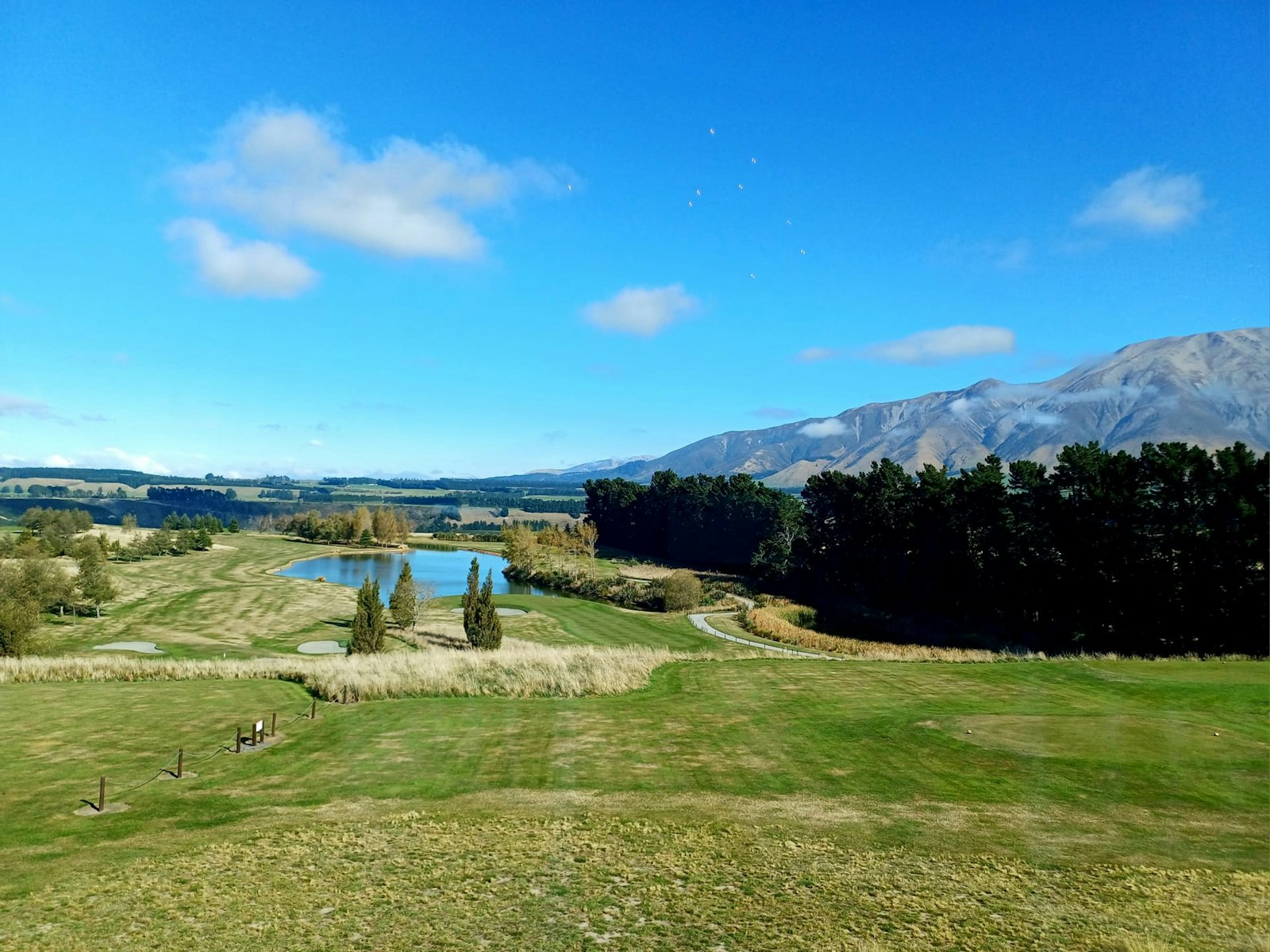
Blue Ridge mountain golf means two different things. If you're in Georgia, it usually means the town of Blue Ridge and the courses around Fannin County. If you're in Tennessee or North Carolina, it means the whole Blue Ridge range: Boone, Asheville, Cashiers, Highlands.
This guide covers both. Courses from North Georgia up through Western North Carolina that sit in Blue Ridge terrain, with honest notes on each. If you're planning a golf trip along the range, this is where to look.
What Blue Ridge golf feels like
Three things define it. Elevation change that works the feel of every shot. Trees (mostly hardwoods) framing every hole. Weather that can flip mid-round, from clear to fog to rain and back.
The ball flies a little farther up here. A Titleist study found golf balls travel roughly 1.2 percent farther for every 1,000 feet of elevation gain. Apple Mountain sits at about 1,400 to 1,500 feet, so the effect is small. At a course near 4,600 feet, a 150-yard shot gains closer to 8 yards.
The bigger factor is slope. Uphill shots play longer than the number, downhill shots play shorter, and sidehill lies move the ball. Club for the slope, not just the yardage.
North Georgia Blue Ridge courses
Apple Mountain Golf Club (Clarkesville)
Phillip Ballard design, 1994. Par 72, 6,428 yards from the Blue tees. Slope 119, rating 69.9. The course sits between roughly 1,400 and 1,500 feet, with elevation changes you feel on every tee box.
About 90 minutes from Atlanta. Ranked #2 Most Improved U.S. Golf Course by Golf Advisor in 2020. The fairways are wide for a mountain course, which means higher handicaps stay in play and lower handicaps can still score. Good jumping-off point for a longer Blue Ridge trip. Course details here.
Brasstown Valley Resort (Young Harris)
Denis Griffiths design, opened 1995, par 72, just over 7,000 yards from the back tees. Water comes into play on 10 holes. GolfPass ranked it No. 6 on its 2024 list of the top 25 public courses in Georgia. The "bigger course" option in North Georgia, and the longest on this page's Georgia list.
Old Toccoa Farm (Mineral Bluff)
Dave Axland and Dan Proctor design, par 72, 6,707 yards from the back tees, with a slope of 149. Near the town of Blue Ridge in Fannin County. It is a semi-private resort course that welcomes public play.
Western North Carolina
Mountain Air Country Club (Burnsville)
Par 70, 6,425 yards, at about 4,600 feet. It is a private club, so access runs through membership or a member.
The elevation change is significant enough to feel in the legs. A walking round is a workout most weekend players aren't ready for. Ride.
Grandfather Golf & Country Club (Linville)
Ellis Maples design, opened 1968, par 72. Private, members and their guests only. If you can get on, do.
Mount Mitchell Golf Club (Burnsville)
Fred Hawtree design, opened 1975, about 6,500 yards, and open to public play. It sits near Mount Mitchell, at 6,684 feet the highest peak east of the Mississippi.
Linville Golf Club (Linville)
Donald Ross design, begun in 1924. Par 72. This is the historical heavyweight of the region. Access is through membership or as a guest of the Eseeola Lodge. If you're a design nerd, make it happen.
How to plan a Blue Ridge golf rotation
A multi-course loop from Atlanta
Play Apple Mountain on the way up, then base in Young Harris or Blue Ridge. Brasstown Valley and Old Toccoa Farm are only 30 to 40 minutes apart, while Apple Mountain to Old Toccoa Farm is about an hour and a half.
The full range
Round 1: Apple Mountain. Round 2: Brasstown Valley. Round 3: Old Toccoa Farm. Round 4: Mount Mitchell or Linville (cross into NC). Plan on two and a half to three hours of driving from the Georgia cluster to the Burnsville and Linville area, so make the NC leg its own overnight.
Solo design pilgrimage
Linville (Donald Ross), Old Toccoa Farm (Axland and Proctor), and Brasstown Valley (Denis Griffiths). Designers worth the drive, and all three can be played without a membership if you stay at Eseeola for Linville.
What to bring
Layers. Mountain mornings start cool and warm up fast, and the weather can turn mid-round. A light pullover in the cart makes a difference.
Extra balls. Hardwoods line most mountain holes, and a ball that finds them on a slope can be gone for good.
Proper walking shoes if you plan to walk. Mountain walks are unforgiving on bad footwear.
A yardage app with slope adjustment. Written yardages don't tell the real story on elevation-heavy holes.
When to go
Fall is the draw. In the northeast Georgia mountains, peak color usually arrives in late October and can run into the first week of November, with higher elevations a week or two ahead of the valleys. Book October weekends at Apple Mountain online as early as you can.
Spring is nearly as good and much less crowded. Dogwoods peak in the Georgia mountains in mid-April, and mountain laurel follows in May.
Summer plays best early. Thunderstorms are most likely in the afternoon and evening, so morning tee times are the move.
Winter varies by course and by elevation. At Apple Mountain, the pro shop keeps daily hours straight through December and January. Call ahead anywhere after a hard freeze.
A note on pace
Mountain golf can take longer than flatland golf. Harder walks, longer cart rides between holes, and more time reading slopes all add up. At Apple Mountain, most weekday rounds still finish in under four hours. Not a bug, part of the feature.
How Blue Ridge courses compare to Pinehurst
Georgia and North Carolina golfers get asked this: why not just drive to Pinehurst. Fair question. A few reasons Blue Ridge mountain courses hold up against the Sandhills.
First, terrain. Pinehurst is sand pine hills with roll, but it's not mountains. Blue Ridge has actual elevation change hole to hole. If that's the kind of golf you want, Pinehurst doesn't deliver it.
Second, travel. Pinehurst from Atlanta is about six hours. Apple Mountain is 90 minutes, Brasstown Valley is about two hours, Old Toccoa Farm is about two hours. The math on a two-day trip is very different.
Third, access. Pinehurst Resort has ten numbered 18-hole courses, and advance tee times on most of them, including No. 2, go to resort guests and members. Blue Ridge public courses are easier to just book, especially midweek.
The tradeoff: Pinehurst has more courses in a smaller area and a deeper design history, starting with Donald Ross and No. 2. If you want a once-in-a-few-years pilgrimage, go. For a regular weekend trip, Blue Ridge wins on logistics.
Start Your Blue Ridge Round at Apple Mountain
The easiest Blue Ridge mountain golf to reach from Atlanta. 90 minutes north.
Book a Tee TimeFor more on the specific courses within driving distance of Atlanta, see Best Golf Courses Near Atlanta. For a deeper look at the mountain courses in Georgia specifically, Mountain Golf in Georgia: Where to Play is the companion piece.
Ready to play? Course details, rates and tee times for Apple Mountain Golf Club in Clarkesville, GA are on our homepage.